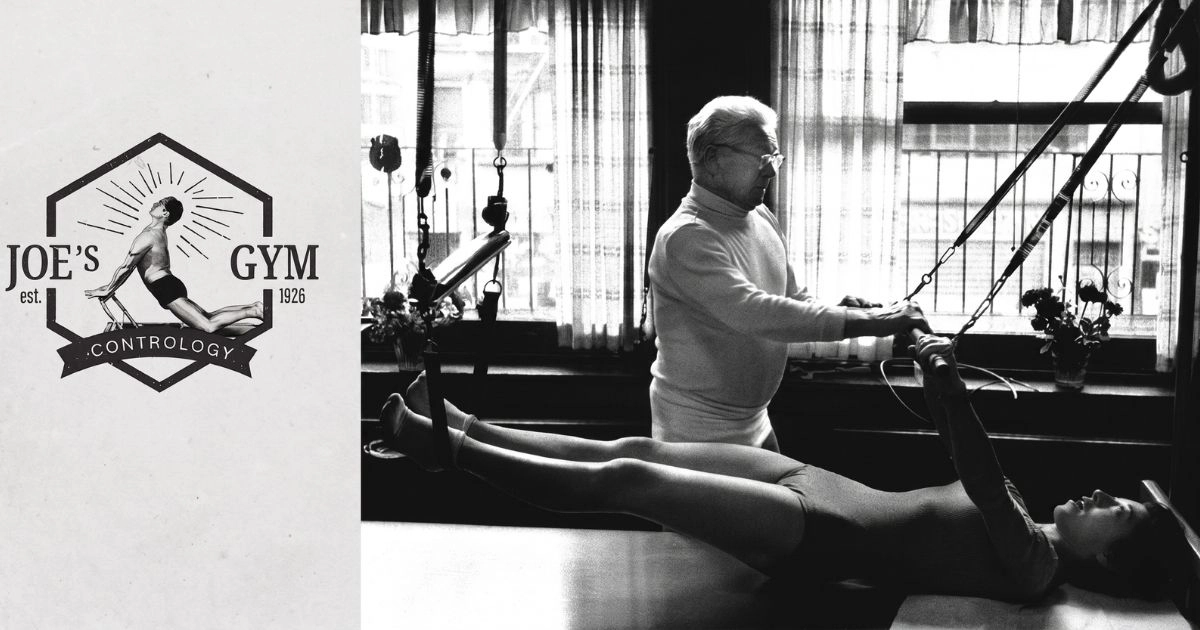
If you’ve been researching Pilates and keep encountering the word “classical” — and aren’t sure what it means or whether it matters — that confusion is understandable. The Pilates market is fractured. There are boutique reformer studios, mat classes at gyms, prenatal variations, chair-based versions, and fusion formats mixing Pilates with yoga or barre. They all use the same name. They are not all the same thing.
The question of what classical Pilates is matters most to people looking for something specific: a method with depth, a clear lineage, and results that come from doing something correctly rather than approximately. If that’s what you’re looking for, here’s what you need to know.
What Classical Pilates Is
Classical Pilates is the original system of movement developed by Joseph H. Pilates — taught in its authentic, unmodified form, with the same exercises, the same sequence, and the same apparatus he designed. It has not been adapted to trend, softened for mass appeal, or combined with other disciplines. What Joseph Pilates built is what classical instructors teach.
This distinguishes it from the many contemporary or “modern” Pilates variations that have emerged since his death in 1967 — versions that selectively adopt some exercises while eliminating others, alter the sequencing, or use redesigned equipment. Those approaches are not without value. But they are not classical Pilates.
Joseph Pilates and the Method He Built
Joseph Hubertus Pilates was born in 1883 in Germany. He was a sickly child — asthma, rickets, rheumatic fever — who became obsessed with physical conditioning. By his twenties he was working as a boxer and circus performer. During World War I, interned in England as a German national, he developed his floor-based exercises for fellow internees. He continued developing the system through the 1920s, eventually designing the full system of apparatus that defines a classical studio today: the Reformer, the Cadillac, the Wunda Chair, the High Chair, the Ladder Barrel, the Spine Corrector, and others. Each piece was designed to develop specific qualities the mat work alone could not.
After the war he moved to New York, opening his studio on Eighth Avenue in 1926 — in the same building as the New York City Ballet. Dancers immediately understood what he had built: a method that developed core strength, spinal mobility, and precise postural alignment without bulk. George Balanchine and Martha Graham both sent their dancers to him.
He called his method Contrology — the complete coordination of body, mind, and spirit. He laid it out in two books: Your Health (1934) and Return to Life Through Contrology (1945). The method comprised 34 mat exercises and a complementary system of apparatus work, working together and complementing each other to fix physical imbalances and build full-body strength and stability.
The Lineage: How the Method Survived
Joseph Pilates died in 1967. His work survived because a small group of instructors had trained directly under him and continued teaching the method as he taught it. These first-generation instructors are known as the Elders.
The most significant was Romana Kryzanowska. A ballet dancer, she began training with Joseph Pilates in the late 1940s after an ankle injury and eventually took over his New York studio after his death. She spent the following decades training the next generation of classical instructors, preserving not just the exercises but the sequencing logic, the pedagogical approach, and the corrections that Pilates himself used. Her stream of the method — Romana’s Pilates — is the closest living lineage to what Joseph Pilates actually taught.
Romana Kryzanowska died in 2013 at age 90. She taught into her eighties.
Other Elders — Carola Trier, Kathy Grant, Ron Fletcher, Eve Gentry — also preserved the work, each with slightly different emphases. A classical instructor today can trace their certification in an unbroken chain back to one or more of these first-generation teachers. That chain is what the word “classical” means in practice.
What Happens in a Classical Pilates Session
A classical Pilates session — particularly a private one — does not look like a group fitness class. There is no mirror-gazing, no counting to eight, no music filling the room.
The instructor watches how you move. They identify what’s tight, what’s weak, what’s compensating for what. The session is built around what your body needs that day — not a preset class plan. The exercises follow a specific sequence, because Joseph Pilates designed that order intentionally. Each exercise prepares the body for the next. Classical instructors honor that order rather than rearranging it for variety or preference.
The apparatus in a classical studio includes:
- The Reformer — a sliding carriage on springs, the most recognizable piece of Pilates equipment. Spring resistance challenges strength, control, and coordination simultaneously.
- The Cadillac (Trapeze Table) — a large table with an overhead frame, springs, bars, and straps. Used for spinal articulation, strengthening, and work the mat and reformer can’t provide.
- The Wunda Chair — compact, demanding. A spring-loaded pedal that requires significant stability and single-leg control.
- The Ladder Barrel and Spine Corrector — arched apparatus designed specifically to decompress and open the spine, address postural asymmetries, and find length in the back body.
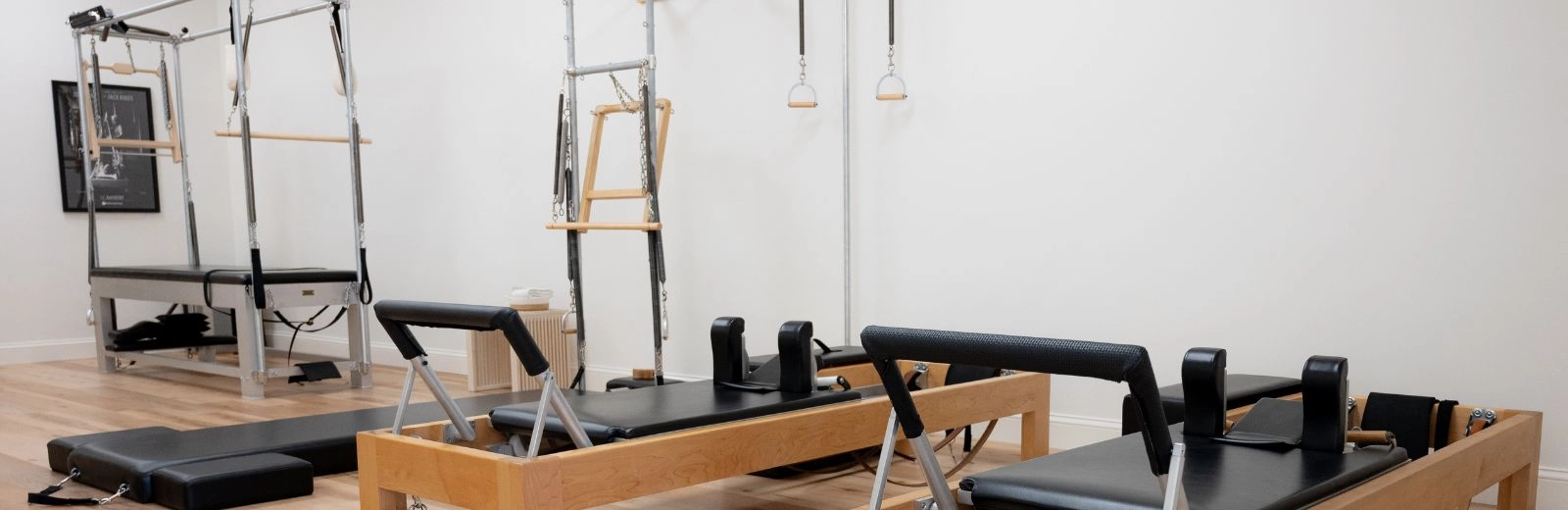
In a private session, a client may move through several of these pieces within one hour. The instructor adjusts in real time — a cue here, a spring change there — based on what they see happening in the body.
Classical vs. Contemporary Pilates: The Actual Differences
In 2000, a U.S. federal court ruled that “Pilates” could not be trademarked. The name entered the public domain. Since then, anyone could call their classes Pilates — including instructors trained in heavily modified or hybrid systems. The result is a market where the same word describes very different things.
Here is what actually distinguishes classical from contemporary:
- Sequence. Classical Pilates follows the original exercise order. Contemporary classes frequently rearrange, substitute, or omit exercises based on instructor preference or class theme.
- Apparatus. Classical studios use equipment that closely replicates what Joseph Pilates designed — specific spring tensions, specific geometry. Many contemporary studios use redesigned equipment with altered resistance systems or additional padding.
- Certification lineage. A classical instructor’s training traces back to a first-generation Elder. Contemporary certifications vary widely — some are rigorous, some are weekend courses. The lineage question is the most reliable way to assess depth of training.
- Cueing philosophy. Classical Pilates uses imagery and sensation-based cues rooted in how Pilates himself taught. The goal is the felt experience in the body, not the correct execution of a shape.
Neither approach is inherently harmful. But they produce different results over time, and if you’re looking specifically for the original method, the distinction matters.
Who It’s For
Joseph Pilates wrote that his method was for “anyone and everyone.” In practice, the people who tend to find the most in classical Pilates are those dealing with something specific: back pain that hasn’t responded to other treatments, recovery from injury or surgery, the postural and strength changes that come with age, or athletic performance that has plateaued despite consistent training.
It is not a beginner-unfriendly method. A good classical instructor can work with a complete beginner — building from the foundational work up. It’s also not a gentle method. Men who arrive skeptical often leave surprised by how demanding the precision work actually is.
The private session format makes this breadth possible. Every session is adapted to the individual, not calibrated for the middle of a group.
Classical Pilates in Old Tappan, NJ
Life By Pilates is a classical Pilates studio at 216 Old Tappan Rd in Old Tappan, New Jersey, serving Bergen County and the surrounding communities. Katya Almog is certified in Romana’s Pilates — the direct lineage from Joseph Pilates through Romana Kryzanowska — and offers private and duet sessions on the full classical apparatus.
Katya came to Pilates herself after a serious medical procedure left her body weakened and traditional approaches weren’t producing results. Classical Pilates worked when other things hadn’t. That experience informs how she works with clients dealing with back pain, injury recovery, post-partum rehabilitation, scoliosis, osteoporosis, and the kind of chronic tension that accumulates from years of sitting at a desk.
New clients start with an Individual Assessment — a first session built around your body, your history, and your goals. View session options or contact the studio to schedule yours.
Frequently Asked Questions
What is the difference between classical and contemporary Pilates?
Classical Pilates follows the original exercise sequence and apparatus system designed by Joseph Pilates, taught by instructors whose training traces back to his first-generation students. Contemporary Pilates refers to modified versions of the method — altered sequences, substituted exercises, redesigned equipment. Classical Pilates preserves the method as designed; contemporary Pilates adapts it. The distinction matters most if you’re looking for depth of training and the full original system.
Do I need experience to start classical Pilates?
No. Classical Pilates is appropriate for complete beginners. A good instructor starts where you are — foundational work first, building from there. At Life By Pilates in Old Tappan, NJ, every new client begins with an Individual Assessment: a first session dedicated to understanding your body and history before beginning the method proper.
Is classical Pilates harder than regular Pilates?
Not inherently — but more demanding of precision. Because the method doesn’t permit substituting easier variations without cause, clients are held to a standard of execution that builds real strength and coordination. Many people who have done contemporary or group Pilates find private classical sessions unexpectedly challenging. The challenge is in the quality of movement, not the intensity of effort.
What is Romana’s Pilates?
Romana’s Pilates is the stream of classical Pilates preserved by Romana Kryzanowska, who trained under Joseph Pilates from the late 1940s and ran his New York studio after his death. It is the closest living lineage to what Joseph Pilates himself taught. Katya Almog at Life By Pilates is certified in Romana’s Pilates. For more on the lineage, read What Is Romana’s Pilates? The Lineage Behind the Method.
How is classical Pilates different from yoga?
They are distinct disciplines with different origins, philosophies, and apparatus. Pilates is a Western system developed in the 20th century, emphasizing spinal health, core strength, and full-body conditioning through apparatus and mat work. Yoga is an ancient Indian practice with spiritual, philosophical, and physical dimensions. They share an emphasis on breath and body awareness. Beyond that, they are fundamentally different practices — and they work well alongside each other.
Life By Pilates is at 216 Old Tappan Rd, Old Tappan, NJ 07675. Katya Almog offers private and duet sessions in Romana’s Pilates. New clients begin with an Individual Assessment. Contact the studio to schedule yours.