The short answer (TL;DR)
Most people know Pilates through group reformer classes or general floor workouts. But Joseph Pilates never intended his method to live on a single machine. Contrology was designed as a complete, connected system of specialized Pilates apparatus—primarily the Reformer, the Cadillac (Trapeze Table), the Wunda Chair, and the Mat. Each piece of equipment uses calibrated steel springs rather than dead weights, providing progressive resistance that supports vulnerable joints while building deep muscular stability. Electromyographic (EMG) research confirms that apparatus-based spring mechanics elicit strong deep trunk and transversus abdominis recruitment compared to standard floor exercises. Understanding how these four pieces of equipment work together helps explain why the classical system is so effective for spinal alignment and long-term joint health.
When new clients walk into my studio in Old Tappan, NJ, they often stop and look around with a mixture of curiosity and hesitation.
Wooden frames. Leather straps. Overhead steel bars. Exposed coiled springs.
If you have only ever seen a conventional gym—or a room lined with twenty identical plastic group reformers—traditional equipment looks very different.
Joseph Pilates did not design generic fitness gear. When he developed his method in the early twentieth century—which he named Contrology—he created an interconnected set of custom Pilates apparatus built to support, align, and strengthen the body.
At Life by Pilates, I teach true Classical Pilates in the direct Romana Kryzanowska lineage. In our private and duet sessions, we do not spend fifty minutes doing endless repetitions on a single machine. We use the full classical Pilates apparatus: the Reformer, the Cadillac, the Wunda Chair, and the Classical Mat.
Each piece of equipment has a specific anatomical purpose. Each one teaches your body something different.
Why the Pilates Apparatus Uses Springs Instead of Weights
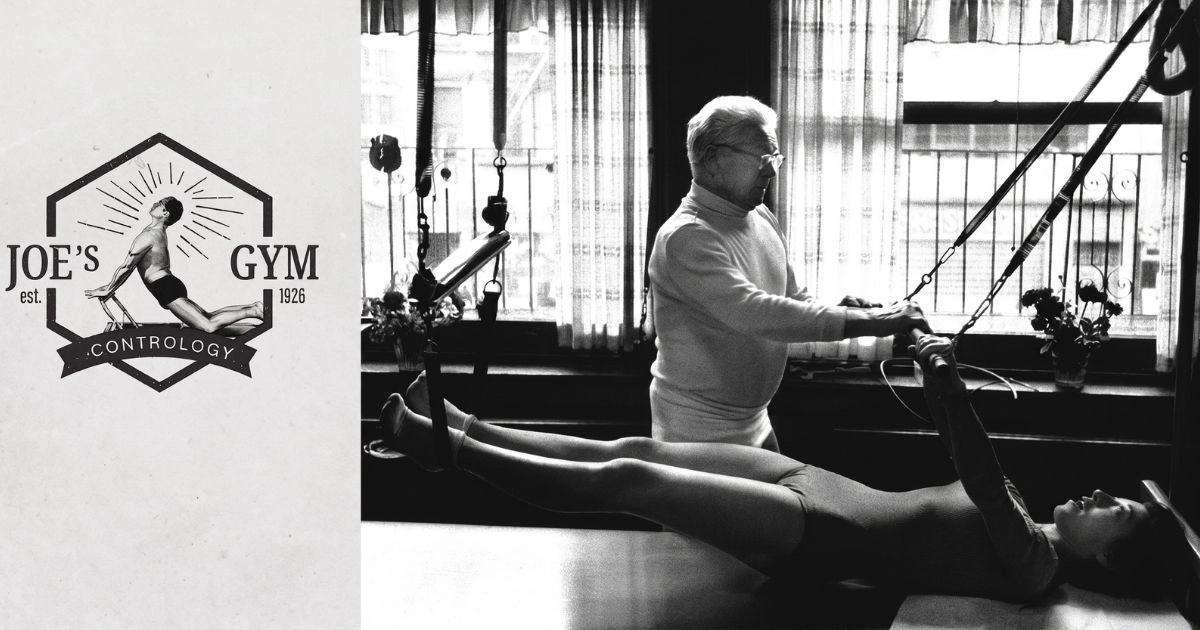
Before looking at the individual pieces, it helps to understand what connects them: calibrated steel springs.
In conventional strength training, you lift dead weight—dumbbells, barbells, or weight-stack cables. Dead weight relies purely on gravity. A twenty-pound dumbbell weighs twenty pounds at the bottom of the movement, twenty pounds in the middle, and twenty pounds at the top. Momentum easily takes over, and the joints often absorb the force at the start and end of each repetition.
Steel springs behave differently.
A spring provides progressive, accommodating resistance. When a spring is at rest, it offers gentle support. As you press or pull against it and the spring lengthens, the tension increases smoothly.
Just as importantly, the spring pulls back during the return phase—requiring eccentric control. You cannot let the springs snap closed. You have to resist their pull and guide the carriage or bar home using your deep stabilizing muscles.
This mechanical effect has been evaluated in peer-reviewed clinical literature. In an electromyographic (EMG) investigation published in the Journal of Electromyography and Kinesiology, researcher J.M. Dias and colleagues analyzed abdominal muscle recruitment across the mat, Cadillac, Reformer, and chair (Dias JM, et al. J Electromyogr Kinesiol, 2014; PMID: 25048643).
The researchers recorded electrical activity in the rectus abdominis and external obliques during classical exercises, comparing concentric and eccentric phases across different equipment setups. Their data revealed how spring-supported apparatus modifications shift muscular demand:
“Higher concentric activation values for the EO were found when the teaser exercise was performed on the Cadillac.”
Depending on how an exercise is set up, a spring can either assist your movement or modify the resistance curve. On apparatus like the Cadillac and Reformer, spring support allows safe spinal articulation and targeted oblique activation before challenging pure abdominal endurance on the mat.
1. The Reformer
The Reformer is the best-known piece of Pilates equipment, though its classical design works quite differently from modern group-fitness machines.
It consists of a wooden and metal frame with a padded carriage that glides along parallel rails. The carriage connects to the frame through a set of uniform steel springs, with a footbar at one end and leather straps on pulleys at the other.
On the Reformer, you work lying down, sitting, kneeling, or standing on a moving surface. Every time you press the carriage out or control it back in, your Powerhouse—the deep core cylinder of abdominals, lower back, pelvic floor, and hips—has to keep your torso centered and quiet.
In private sessions, the Reformer is especially helpful for three things:
- Showing Asymmetries Clearly: Because both feet press against a single bar or both hands pull matched leather straps, the Reformer immediately reveals when one side of your body is working harder than the other. If your right leg pushes harder than your left, the carriage shifts unevenly.
- Strengthening Without Compressing the Spine: When you lie on the carriage, gravity is not pressing down vertically through your vertebrae. You can strengthen your hips, legs, and core while your back rests in a supported position.
- Lengthening Tight Muscles Under Control: Exercises like Long Spine and Elephant stretch the hamstrings, calves, and back while the muscles remain actively engaged, rather than forcing a passive stretch.
2. The Cadillac (Trapeze Table)
While the Reformer is built around a moving carriage, the Cadillac—also called the Trapeze Table—is built around a stable, elevated mat table with an overhead steel frame.
Its design comes from Joseph Pilates’ early work rehabilitating bedridden patients during World War I, when he attached springs to hospital bed frames so recovering patients could exercise safely against resistance before they were able to stand.
The classical Cadillac includes several distinct attachments that we use depending on what your body needs:
- The Push-Through Bar (which can be sprung from above or below)
- The Roll-Down Bar attached to two matched springs
- Independent arm and leg springs with leather loops
- The overhead Trapeze and hanging loops
Because the table surface itself does not move, the Cadillac is often the best place to start if you are dealing with acute back tightness, scoliosis, balance issues, or limited mobility.
In the studio, we rely on the Cadillac for:
- Segmental Spinal Articulation: Using the Roll-Down Bar or Push-Through Bar, the springs support part of your body weight so you can articulate through stiff areas of the spine one vertebra at a time.
- Gentle Spinal Traction: Hanging or supporting the pelvis from the overhead bars allows the lower back and hips to decompress gently using your own body weight.
- Independent Limb Work: Because each arm or leg works with its own individual spring, your stronger side cannot take over for your weaker side.
3. The Wunda Chair
Joseph Pilates originally designed the Wunda Chair for small New York City apartments—a sturdy wooden box that functioned as a living room chair and flipped over to become a compact exercise piece with a spring-loaded pedal.
Despite its simple shape, the Wunda Chair is one of the most challenging pieces of Pilates apparatus in the studio.
On the Reformer and Cadillac, a long mat supports your torso. On the Wunda Chair, you are sitting, standing, or balancing over a small padded seat. Because you have a much smaller base of support and your torso is often upright against gravity, your deep stabilizing muscles have to work immediately to keep you balanced.
We use the Wunda Chair to build:
- Upright Core Stability: Most of daily life happens sitting, standing, and walking—not lying on your back. The Wunda Chair teaches you to keep your pelvis stable and your spine tall while moving upright.
- Shoulder and Ribcage Control: Pressing and controlling the heavy pedal with your hands or feet requires strong connection through the upper back, serratus anterior, and deep abdominals without tensing the neck.
- Single-Leg Strength and Balance: Exercises like Going Up Front and Mountain Climber build practical hip and knee stability for walking, stairs, and sports.
4. The Classical Mat
Many people assume that mat Pilates is for beginners and the machines are for advanced clients.
In Classical Pilates, it is actually the other way around.
On the Reformer and Cadillac, the springs, bars, and straps help guide your alignment and support part of your weight. On the Classical Mat, that mechanical help is gone. Aside from a raised mat with a foot strap and wooden dowels to anchor your feet or hands, you are working entirely with your own body weight against gravity.
In a clinical systematic review published in Disability and Rehabilitation, researchers compared Pilates apparatus training and mat work for chronic low back pain (Patti A, et al. Disabil Rehabil, 2024; DOI: 10.1080/09638288.2023.2251404). The authors found that while apparatus work provides valuable spring assistance and controlled resistance during rehabilitation, unassisted mat exercises require strong independent motor control of the trunk stabilizers.
The apparatus teaches your body where the work should come from. When you return to the mat, you feel right away how much strength and control your body has truly built.
How the Equipment Works Together in a Session
In my studio, we do not treat these four pieces as separate workouts. They are parts of one system, and we move between them in a single session based on what your body needs that day.
In a typical private lesson:
1. We often start on the Reformer with Footwork and the Hundred to warm up the body, connect to the Powerhouse, and check how your hips and spine are tracking.
2. If your lower back or shoulders are tight, we may move to the Cadillac to use the Roll-Down Bar or leg springs for supported length and decompression.
3. We might bring in the Wunda Chair to work on upright hip strength, balance, or unilateral leg control.
4. We frequently include Mat work so you learn to carry that same alignment and control into everyday movement without relying on a machine.
Instead of forcing every client through the same routine on one piece of equipment, we use the classical Pilates apparatus to meet your body where it is.
Orthopedic Advisory & Red-Flag Symptoms
While the Pilates apparatus was designed for safe conditioning and rehabilitation, spring-loaded equipment requires qualified supervision. If you are managing an acute disc herniation, spinal stenosis, osteoporosis, or radiating nerve pain, generic group classes can aggravate your symptoms. Always consult your physician before starting a new exercise program. At Life by Pilates, all sessions are private (one-on-one) or duet, so every spring setting and exercise is chosen specifically for your medical history and physical boundaries.
Working with the Full System in Old Tappan
Reading about how springs and straps work is a helpful starting point, but you really understand the difference the first time you feel how the classical equipment supports your spine.
If you are looking for attentive, one-on-one instruction on the complete classical Pilates apparatus in Bergen County, I welcome you to visit Life by Pilates in Old Tappan, NJ. You can view our session options on our rates page, or get in touch through our contact page to schedule your initial private session.
Frequently Asked Questions
Neither is inherently harder; they challenge your body differently. The Reformer uses springs that can both assist you through difficult movements and provide heavy resistance to build deep muscular strength. The Mat offers zero mechanical assistance, meaning you must lift and control your entire body weight against gravity using only your internal muscular control. Most practitioners find that the Reformer helps them understand the movements, while the Mat tests their pure core endurance.
Weights rely on gravity and provide fixed resistance, which often leads to momentum and abrupt joint loading. Springs provide progressive resistance: the tension increases smoothly as you stretch the spring and demands continuous eccentric control as you close it. This protects connective tissue, prevents joint wear, and trains muscles to maintain stabilization throughout the entire arc of motion.
Yes, and in fact, the apparatus is ideal for back rehabilitation when guided by an experienced instructor. On the Reformer and Cadillac, you can perform core strengthening and hip decompression exercises while lying down, removing gravitational load from your spine. The springs can be adjusted to support your pelvis and guide your vertebrae through safe, pain-free articulation.
Classical Reformers (built according to Joseph Pilates’ original specifications by manufacturers like Gratz or Basil) feature specific spring tensions (uniform steel springs with no color coding), natural leather straps, a precise carriage distance, and a non-padded footbar. They are designed to enforce strict biomechanical alignment. Contemporary reformers used in large group fitness studios often have softer padding, variable lightweight bungee-style springs, and wider footbars intended for high-speed, fitness-style workouts rather than precise classical Contrology.
No prior experience is necessary. Because our studio exclusively provides private one-on-one and duet sessions, your instructor personally sets every spring, guides every movement, and spots you throughout every exercise. We begin with foundational setups and progress systematically as your strength and body awareness develop.