The short answer (TL;DR)
In a fitness culture obsessed with sweat and speed, the true intent of Pilates is often lost. Joseph Pilates did not design a generic workout; he created Contrology—a systematic, mind-body method built on six foundational classical Pilates principles: Centering, Concentration, Control, Precision, Breath, and Flow. Modern clinical research confirms that these classical Pilates principles are not mere fitness jargon. From ultrasound studies showing deep muscle activation to systematic reviews outlining postural control, the classical principles are the precise mechanism that protects the spine, builds symmetric core stability, and delivers physical longevity.
Walk into almost any fitness studio in Bergen County, and you will see a similar scene. Loud music, high-speed movements, and a generic sweat-inducing routine designed to leave you exhausted.
It is exhausting. But is it effective?
When Joseph Pilates developed his method in the early twentieth century, he had a very different vision. He did not design a series of quick, repetitive movements to burn calories. He called his method Contrology—the complete, conscious coordination of body, mind, and spirit. It was a rigorous, highly disciplined method designed to restore natural physical function and build structural symmetry.
To achieve this, the method relies on a strict foundation of six core classical Pilates principles: Centering, Concentration, Control, Precision, Breath, and Flow.
At my studio in Old Tappan, NJ, I practice true Classical Pilates in the direct Romana Kryzanowska lineage. I teach these six principles not because they are traditional, but because they are the exact biomechanical keys that make the method work. When you strip them away—as many contemporary group fitness classes do—you are no longer practicing Pilates. You are simply exercising on a machine.
To understand why these principles matter, we must look beyond the studio walls and examine what peer-reviewed clinical research reveals about their physical effects.
Defining Pilates: What the Research Actually Says
The medical and scientific community has taken a deep interest in Pilates over the last two decades. As the method has grown in popularity, clinical researchers have sought to define its core characteristics and measure its therapeutic value.
In a comprehensive systematic review published in the journal Complementary Therapies in Medicine, lead researcher Cherie Wells and colleagues analyzed 119 peer-reviewed studies to establish a rigorous, consensus-based definition of the method (Wells C, et al. Complementary Therapies in Medicine, 2012; PMID: 22579438).
The authors concluded that academic literature defines Pilates as:
> “A mind-body exercise that focuses on strength, core stability, flexibility, muscle control, posture and breathing.”
However, Wells and her team uncovered a striking statistic: while the general consensus recognizes these benefits, the traditional classical Pilates principles themselves—centering, concentration, control, precision, flow, and breathing—were explicitly detailed in only about 23% of the analyzed scientific papers.
This gap in the literature represents a critical disconnect. Many clinical studies evaluate “Pilates-based” exercises without enforcing the strict quality, control, and precision that define the actual classical method.
For the person seeking relief from chronic pain or athletic conditioning, the lesson is clear: the physical benefits of Pilates do not come from the exercises themselves. They come from how the exercises are performed. The magic is in the principles.
The 6 Classical Pilates Principles
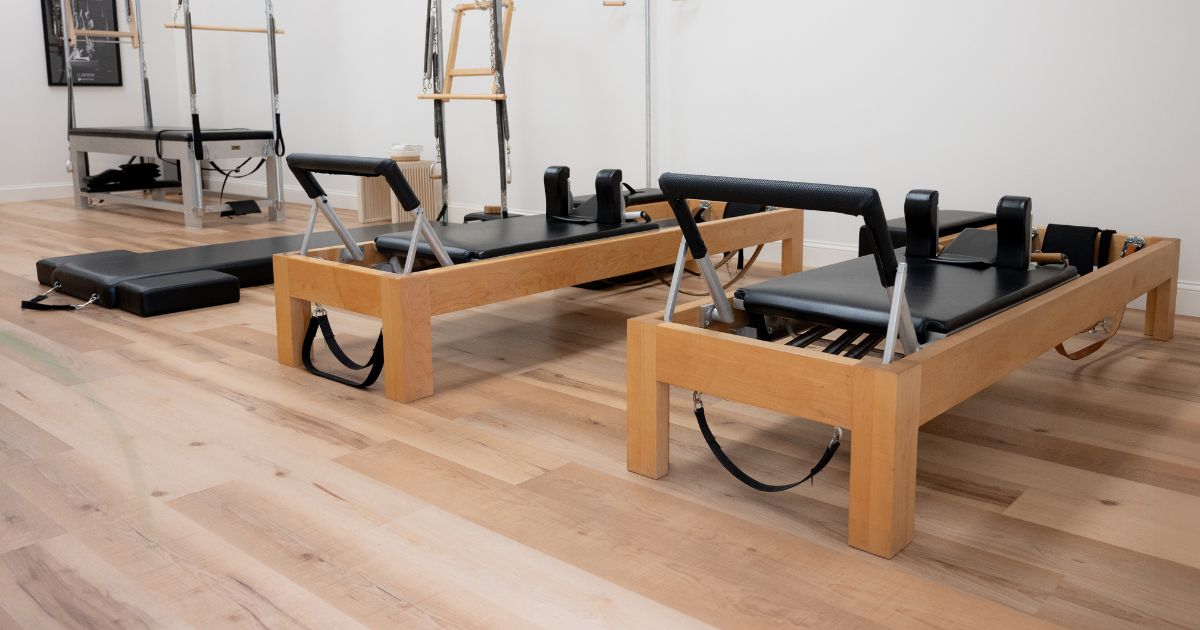
Let us break down each of these six principles, examining their clinical relevance and how we apply them on the custom-crafted apparatus in my studio.
1. Centering (The Powerhouse)
Among all the classical Pilates principles, centering is the foundational starting point. In Classical Pilates, every single movement initiates from your center. Joseph Pilates called this region the Powerhouse—the physical engine of the body. Geographically, it encompasses the muscles from the base of your ribcage to the pelvic floor, wrapping entirely around your lower back and hips.
From a clinical perspective, centering is the activation of your deep local stabilizing muscles. These include the transversus abdominis, the lumbar multifidus, the diaphragm, and the pelvic floor.
The physical reality of this activation has been measured using advanced medical imaging. In a clinical study published in the Archives of Physical Medicine and Rehabilitation, researchers I. Endleman and D.J. Critchley utilized rehabilitative ultrasound scanning to measure deep muscle activation during Pilates (Endleman I, Critchley DJ. Archives of Physical Medicine and Rehabilitation, 2008; PMID: 18996251).
The study demonstrated that specific Pilates movements significantly increase the thickness of the transversus abdominis and internal oblique muscles compared to resting states.
Crucially, the researchers noted that this deep activation did not occur automatically. It was highly dependent on the quality of the movement and the specific “abdominal drawing-in maneuver”—in other words, the conscious act of centering. Without centering, the superficial muscles took over, leaving the deep spine completely unsupported.
In our private sessions, we build this centering connection on the Reformer. During the Footwork series, you learn to keep the pelvis perfectly quiet and the Powerhouse completely active while your legs push and pull the carriage against the resistance of steel springs. You learn that your center is your anchor.
2. Concentration
Concentration is the bridge between your mind and your muscles. You cannot practice true Classical Pilates while thinking about your grocery list or checking your phone.
To execute the repertoire correctly, you must bring your full cognitive focus to the movement. You must actively feel where your pelvis is in space, detect which side of your ribcage is lifting, and consciously command your muscles to engage.
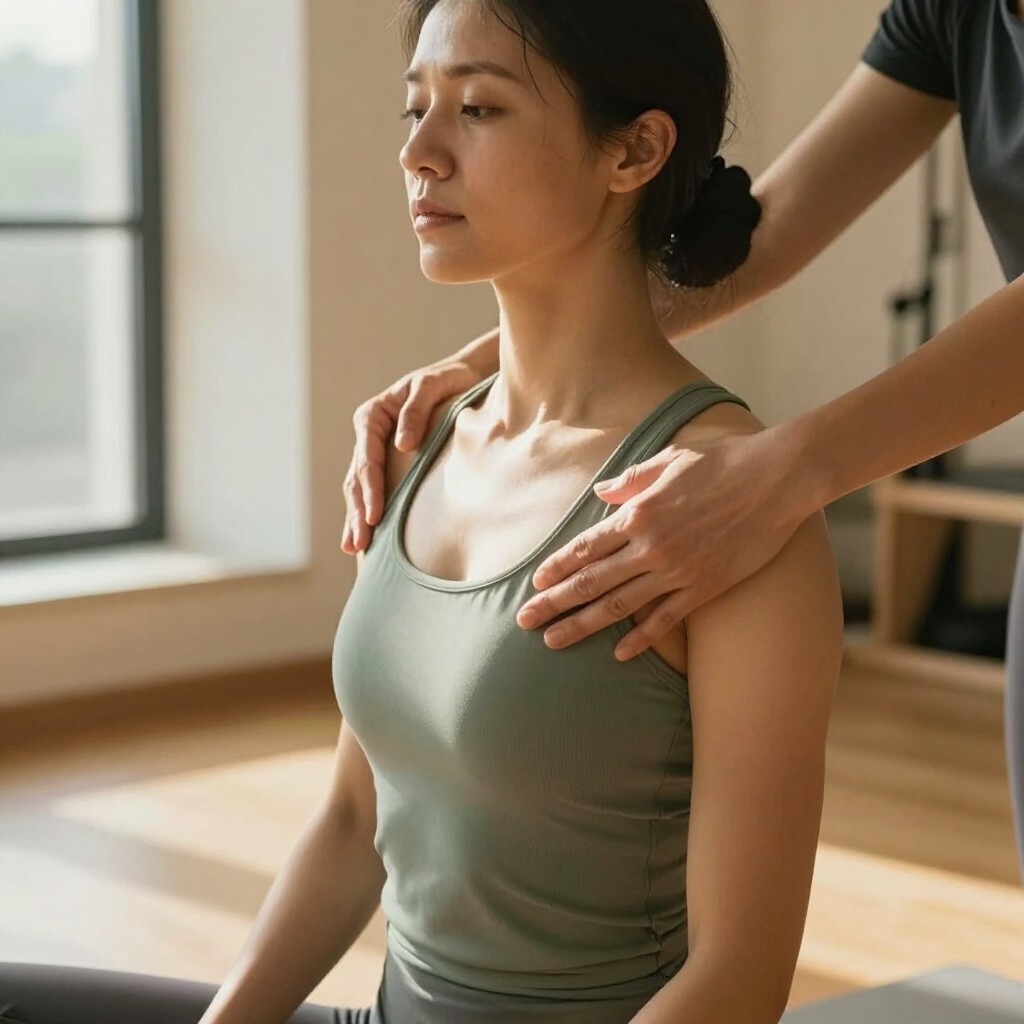
This intense mind-body connection has profound neurological benefits. It recruits a higher percentage of muscle fibers, improves motor control, and reinforces healthy movement patterns in your nervous system. By concentrating deeply on the details, you train your brain to coordinate complex physical actions with ease.
3. Control
Control is among the most demanding classical Pilates principles. In my studio, we do not permit gravity, momentum, or uncontrolled spring tension to dictate your movement. You must control every inch of the exercise.
When you lift a leg, you control it. When you lower it, you control it even more.
This controlled, deliberate execution prevents micro-trauma in the joints. When people exercise with raw momentum—such as swinging heavy weights or bouncing in high-impact classes—their joints and connective tissues absorb the violent forces. In Pilates, by moving with absolute control under uniform spring tension, we build resilient, long-lived joints and highly developed muscular endurance.
4. Precision
Precision is the absolute opposite of sloppy movement. In the classical repertoire, there is no generic “good enough.” Every finger placement, every foot angle, and every spinal articulation has a specific anatomical purpose.
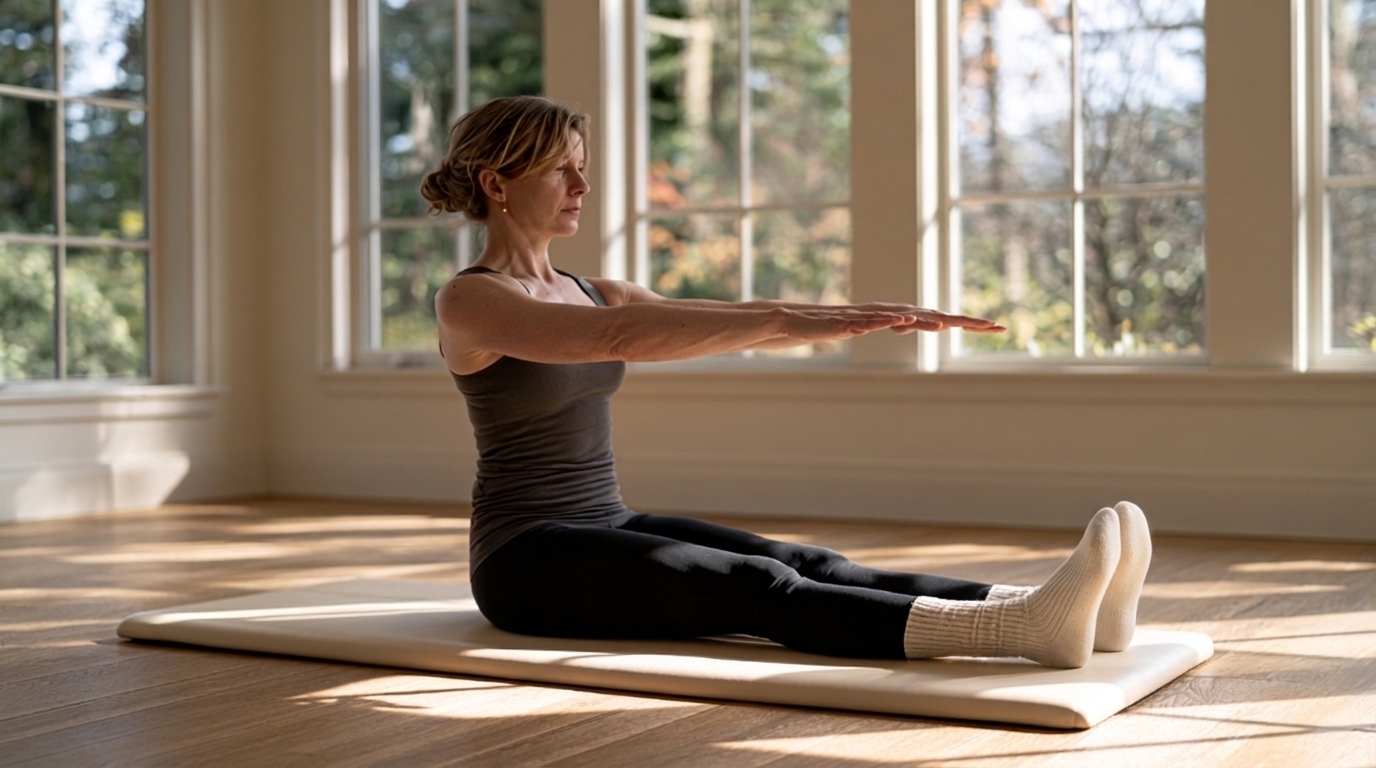
We do not perform endless, mind-numbing repetitions. Instead, we do fewer repetitions—typically five to ten—with absolute, uncompromising precision.
Precision corrects the structural imbalances that lead to chronic wear and tear. If your left hip is slightly tighter than your right, your body will naturally compensate by twisting your lower back. By enforcing strict, symmetrical precision in every movement, we gradually realign your skeleton, correct muscular asymmetry, and eliminate the root causes of chronic pain.
5. Breath
Joseph Pilates wrote extensively about the vital importance of correct respiration. He viewed the breath as a physical cleansing mechanism, designed to pump fresh, oxygenated blood through the body and eliminate stagnant air from the lungs.
In our practice, we use a specific, deep lateral thoracic breathing pattern. We do not hold the breath during challenging movements. Instead, we coordinate the breath directly with the exercise:
- An exhalation is timed with the moment of greatest physical effort or spinal flexion, helping to deeply hollow the Powerhouse and stabilize the spine.
- An inhalation is used to facilitate spinal extension and expand the chest.
This synchronized breathing keeps your heart rate stable, reduces physiological stress, and ensures your muscles have a continuous supply of oxygen when they need it most.
6. Flow
Flow is the quality that makes Classical Pilates look like a controlled, seamless dance. There are no static holds or awkward, jarring transitions in the classical system.
Every exercise flows dynamically into the next. The transition is part of the workout.
Flow builds dynamic, functional strength. In your everyday life, you do not move in isolated, static positions. You reach, bend, twist, and walk in one fluid, continuous sequence. By training your body to transition smoothly between complex physical shapes, we develop the dynamic balance, coordination, and grace needed for real-world movement.
Why the Classical Approach Matters for Your Longevity
It is easy to find modified, contemporary variations of Pilates. You can find them in massive group reformer classes or on digital streaming apps.
These variations often strip away the principles of concentration, control, and precision in favor of raw muscle fatigue. They focus on making your muscles burn, often at the expense of your joint alignment and spinal safety.
This compromise is dangerous, particularly for those dealing with orthopedic concerns.
Orthopedic Advisory
If you have been diagnosed with a specific spinal condition—such as a herniated disc, scoliosis, or severe osteoporosis—uncontrolled, generic exercise can cause direct harm. High-speed twisting, aggressive forward bending (flexion), or unsupervised reformer work can place dangerous pressure on vulnerable vertebrae. You must obtain medical clearance from your physician before beginning any new protocol. Safe recovery requires one-on-one, professional supervision where movements are modified precisely for your spinal boundaries.
True Classical Pilates is different. By keeping the classical Pilates principles at the absolute center of our practice, we prioritize your long-term joint integrity over temporary muscle exhaustion. We work systematically, using the supportive resistance of the Reformer and the Cadillac to build a body that feels balanced, symmetrical, and completely pain-free.
Practicing the Classical Principles in Old Tappan
Developing physical stability does not happen overnight. It is a practice that requires patience, consistency, and expert guidance.
When you join me for private sessions in Old Tappan, we do not simply go through the motions. I will help you develop the deep centering of your Powerhouse, teach you the precision needed to protect your joints, and guide you through the flowing transitions of the classical system.
Your posture will improve. Your joints will feel lighter. And your center? Solid.
If you are ready to move away from generic workouts and experience the deep, restorative power of the classical method, I invite you to begin. You can explore our private session rates and package options on our rates page. Contact the studio today to schedule your private Individual Assessment and discover how true Classical Pilates can support your health and physical longevity.
Frequently Asked Questions
Classical Pilates follows the original system, repertoire, and apparatus designs developed by Joseph Pilates, taught in his direct lineage (such as through Romana Kryzanowska). It maintains a strict focus on the six core principles and uses specific order and transition flows. Contemporary Pilates often mixes the method with modern fitness trends, using modified machines, high-speed repetitions, and group formats that frequently compromise the traditional principles of precision and control.
High repetitions with poor form build muscle imbalances and place repetitive strain on your joints. Precision ensures that the target muscles are isolated and engaged correctly, while your skeleton remains in optimal alignment. By performing fewer repetitions with absolute precision, you achieve deeper muscle activation and avoid the wear and tear associated with sloppy, repetitive exercise.
The mind-body connection is not mystical; it is neurological. When you concentrate deeply on a specific muscle contraction, your brain sends stronger, more coordinated electrical signals through your nervous system. This improves motor unit recruitment, meaning you engage more muscle fibers and perform movements with greater efficiency, control, and stability.
It is extremely difficult. In a large group class, an instructor cannot closely monitor the exact alignment, breathing, and muscle recruitment of ten or fifteen people at once. Without individual corrections, clients naturally default to their existing muscle compensations, bypassing the deep stabilizers of the Powerhouse. Private one-on-one training is the most effective way to master these classical Pilates principles and ensure your safety.
Deep lateral thoracic breathing expands your ribcage sideways and backwards, keeping your abdominal wall active even on the inhalation. When you exhale deeply during the most challenging phase of an exercise, it naturally contracts the transversus abdominis and pelvic floor, reinforcing your Powerhouse and providing dynamic support to your lower back when it is under the greatest load.